A commentator in The Saturday Paper recently wrote piece seeking to explain the exhaustion many of us feel. Why we turn away from the news in favour of binge-watching crime dramas or english royalty on Netflix. The term she used was ‘polycrisis’ where multiple things go wrong at the same time: fires, accidents, COVID resurgent, wars starting (again) globally.
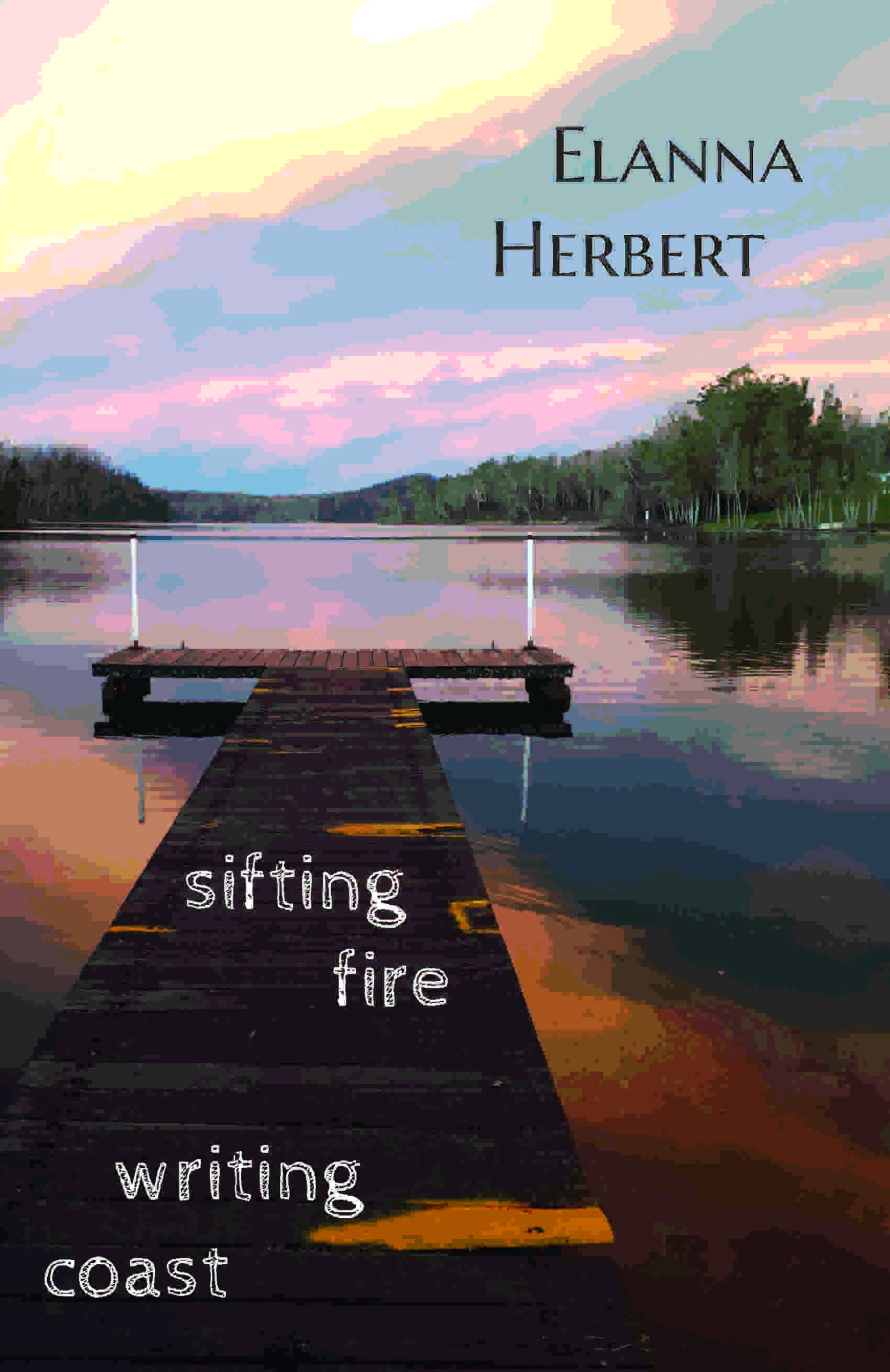
While reading Elanna Herbert’s new book of poetry, Sifting Fire Writing Coast from Tasmanian publisher Walleah Press, I thought about polycrisis.
Herbert’s poetry has been widely published and awarded, although this is her first collection. While these poems were written over several years there’s a clear thematic focus to the collection. The book is divided into three sections: Fire which deals largely with the trauma of the 2019/20 bushfires in South East Australia (the poet’s house barely survived but many neighbouring properties were lost and a local resident died); Sifting which turns to more personal poems as well as poems with international settings Turkey, Egypt, Italy and Kokoda in Papua New Guinea; and Coast which explores issues around travel and transit. Even before you get to the first poem, the preamble sums up the tone of what follows:
‘fire:
with your bright new meaning
you bastard...’
In Fire Rites, we are reminded of Scomo (former Australian Prime Minister Scott Morrison) eager for Hawaii as locals face the fiery apocalypse. ‘Watch from my night-deck on the ridge line/your orange-red glow of still burning trunks reignites us./:incendiary.
Again and again, the poet returns to the fires: a revealing list of what to take when the fire arrives (cross out any which no longer apply); walking out after the fires into a ruined landscape in Part of its trunk (which won the June Shenfield National Poetry Award 2020); or finally When the first rain comes ‘It is pathetic.’
Processing Afghan Asylum Seekers adds a somewhat lighter touch to the grimness of Australia’s ‘turn back the boats’ policy. Herbert worked as an immigration officer for a period so writes authoritatively. She describes the checked flannel shirt as an act of fashion defiance against the Taliban and then (metaphorically) leans over and confides: ‘you can spot the ones who’ve spent years in detention they still walk slowly energy saving…’ As the first section closes the poet finds a kind of redemption. Firepit (which was shortlisted for the 2021 ACU Poetry Prize) tells of an item recovered from the ruins of a neighbour’s house re-purposed as waterhole for two surviving Bower Birds.
‘Today two Bower Birds discovered my stolen
iron firepit, holding the dichotomy firmly
by the rim, simultaneously fire and water. The
male glorious as ever in satin, midnight blue.
Iridescent. The female camouflaged, a piece of

Soft green speckle, jittery, drinking at her new
waterhole.
Sifting opens with a poem in memory of her father The Yass Fossils
...being with Dad
in the year i discover Science, things new
exciting, close. i became important, almost
a real thing, when he took me and the boy
next door to visit Science.
Notice the small i personal pronoun, so tentative on the page where Science (and Dad) gets a capital.
Coast the final section of the book, has some gentler descriptive pieces such as Leaving Flores and Lake Conjola
read the reflection
in the January king tide

like stars float on a surface
of black infinity water
big diamond little diamond
phosphorescence
It also contains poems that deal with being rootless, bouncing between one coast and another. A favourite is the poem ‘east…west….east……west……east……west… where each blocky stanza deals with one location and time separated by the shifting refrain ‘so far home, flying across a continent’. Between the beauty of the Milky Way on a clear night in Gundaroo (outside Canberra), to Sydney and Conjola ‘fruit bats & lakes night surf’, to the thirsty soil of Perth ‘wedged between a neighbour who has a boat and hates trees & a neighbour without a boat who speaks truth…’ there’s always flight. By the end of the poem, flight feels brutal and wrenching. Here is the poet as nomad always flying somewhere, rootless; any connections are interim and provisional.
The collection closes with another tough poem, SIEV221 File Note: to mothers waiting. Here’s the poet on Christmas Island on 2010 finding flotsam from the wreckage of an Indonesian fishing boat, in which 50 people died and became the worst civilian maritime disaster in Australia in more than a century.
Herbert currently lives on the south coast of NSW, although she has lived, worked and travelled in Canberra, Perth, South Australia and many other dry locations, and this dryness suffuses much of this poetry. It feels like the poet is working there, working amongst the ashes and the dust and raking over the hard-baked soil, writing about crisis, and fires and asylum seekers and ruined lakes. Using a variety of forms: list poems, prose, a stanza-ed poem, non-standard typography, she deftly explores and sifts through the particulars of place and being and our shaky connections to the land as settlers on this arid country.
To be clear, I like this collection, it is engaging, purposeful and gutsy poetry. More importantly though, it shows what good poetry can do. In a time of polycrisis, poetry like this shows us how to talk about place and history and trauma; it toughens us up and gets us ready for what’s coming next.
I hope we don’t have to wait years for Elanna’s next book (poetry publishers take note.)
For music this morning, I’ve been listening to US gamelan player Daniel Schmidt’s 2016 album In My Arms, Many Flowers (Youtubers)
 Peter Frankis writes