Friday favourites – January 26 (Invasion day)


It’s invasion day here in Australia (aka Australia Day). A date when we remember the establishment of the first British colony on mainland Australia (1788) and the beginning of the widespread displacement and destruction of the local residents, one of the oldest human cultures on earth. Even as recently as October last year, the majority of electors decided at a referendum not to recognise Aboriginal and Torres Strait Islanders in Australia’s constitution.

A few favourites from this week, starting with a bi-seasonal poem for all you winter readers by local poet Mark Tredinnick. Mark is a celebrated poet, essayist, and teacher. His most recent collection of poems (his fourth) is Walking Underwater (June 2021). His many other works of poetry and prose include A Gathered Distance, Almost Everything I Know, Egret in a Ploughed Field, Bluewren Cantos, Fire Diary, The Blue Plateau, and The Little Red Writing Book. I came across this lovely piece of his to share.


A big shout-out to Bangalore poet Rajani Radhakrishnan – who’s poetry podcast ‘Poetry and Stuff‘ features readings of poetry from Emily Dickinson, Jisei and a wonderful piece from recently deceased Palestinian poet and academic Refaat Alareer. Poetry and Stuff is up to ep. 13, so there’s riches for you to enjoy.


Finally, this poem, Elegy by US poet and teacher Daisy Fried made me smile, even though it’s an elegy and reminded me of getting my own ear lobe pierced (at a chemist). Lovely detail in the writing and great humour – even though it’s an elegy.


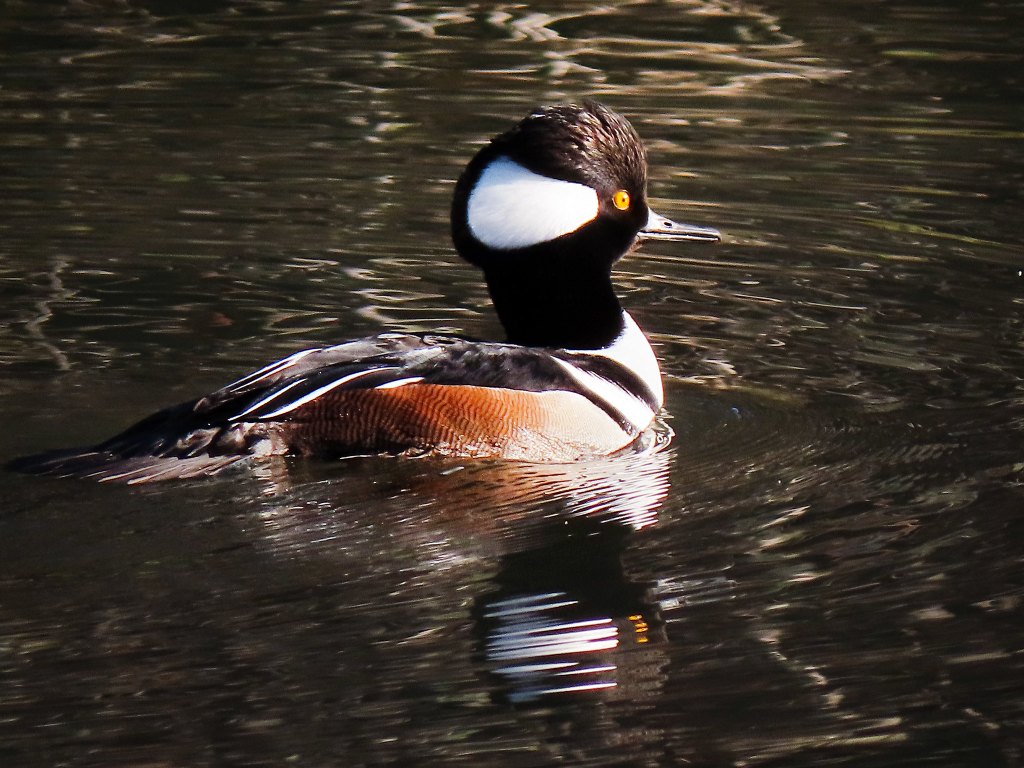
Image: A single male Hooded Merganser, at Summer Lake in Tigard Oregon, c/- Richard Griffin on Flickr

For music this morning: I’m in two minds about this one, so let me know what you think – here’s eclectic folk duo Woo with their 2014 album Into the Into the Heart of Love (Youtube) (maybe start with Make me Tea)

Bandcamp describes them as…”Oddly dubby, mesmeric, insular, playful, undefinable, instantly recognisable, warm, romantic, optimistic, ethereal, timeless, pop music for another universe, time-locked into the spirit of ’67, witty yet quintessentially British, futuristic elevator muzak.”

Big Summer 

(after Philip Gross)

              and on the appointed day, 
or thereabouts, everyone drives off to find it
going bumper to bumper audiobooks at a standstill 
till they hit the the bridge at the Bay
where summer officially begins.

Reversing vans onto powered sites
families arrive at crazy angles, lean-tos
bottom hand down, unrolling tarps
unfolding tables and what are you wearing? 
barely shorts, palm prints and heavily logoed tees

rising over swollen bellies. 
Staggered by the embrace of eucalypt and diesel,
you’re pulling cones in a juice bottle bong 
and holding in that sweet herbal 
until the contours of the day

swirl with laughter so you finally put aside
the self that was half the body’s winter.
Cicadas so loud you have to SHOUT 'I've arrived'
thongs for the blaze of sand or go barefoot fuckit 
where every shadowed path is alive with blacksnakes

and the water is revelatory—a turquoise roaring 
familiar as a Cronulla childhood
until the flash rip takes the legs
out from under you, and you’re up to your neck
in it. 

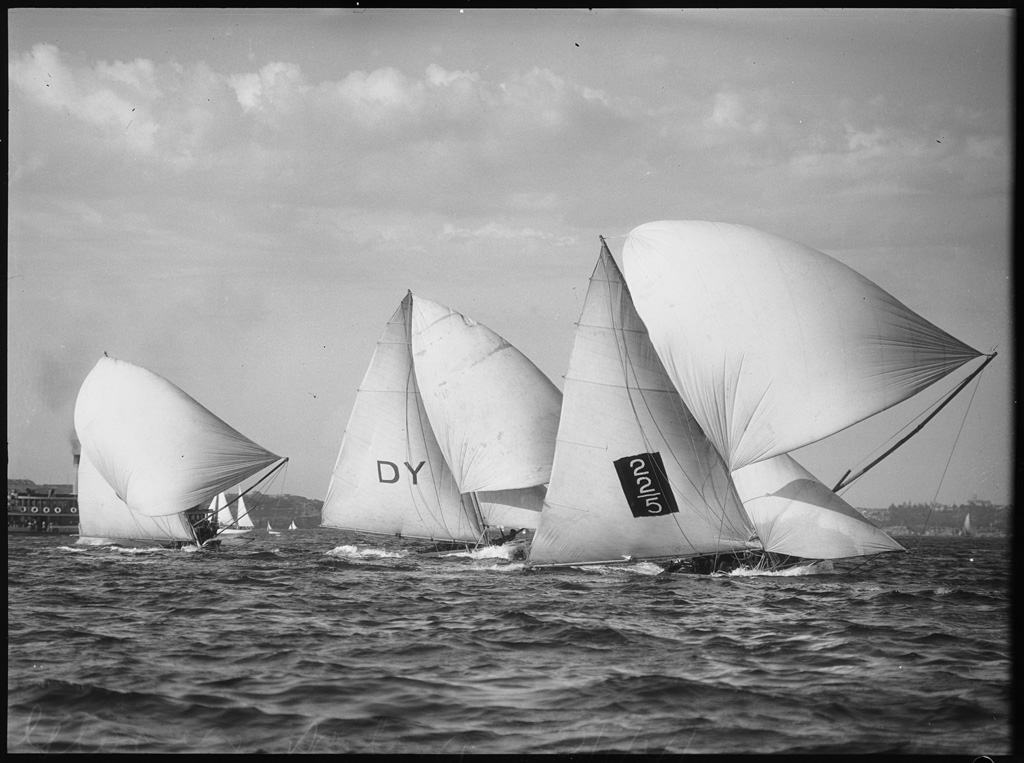
Image: c/- State Library of NSW on Flickr. A summer holiday poem after Philip Gross’ Big Snow.

Notes: ‘the Bay’ refers to Batemans Bay on the NSW South Coast; a juice bottle bong is a makeshift water pipe for smoking marijuana – comprised of some aluminium foil, a section of garden hose and a plastic orange juice bottle; thongs in this context are a rubber soles held to the foot by two straps that meet between the first and second toes; Cronulla is a seaside suburb of Sydney; a flash rip is caused by the unexpected collapse of a sand bar.

And for music this morning here’s London-based jazz ensemble seed with their 2021 album balletboyz (Youtubers try this)

Friday favourites – 12 January

My first Friday favourite for today (it’s actually Saturday morning here) is new wordpress blogger and long-time poet Tim Heffernan. Tim is re-publishing some of his wonderful poetry on his new wordpress site. Well worth a visit and a follow. The South Coast Writers Centre published his poem ‘at wagga beach‘ in the 2023 anthology – 34-37 Degrees South where you can hear Tim reading.

...seeking
shade those summers we unfurled our towels under
the red gums down at the beach where the river’s
curve stopped the sand. 

While we’re on the South Coast Writers Centre (and this one is largely for Australian readers), my favourite writers centre is having a fundraising drive at the moment – through Chuffed.org – The fundraiser is to help support programs for new writers as well as our hardship program for writers in financial difficulty. There’s some wonderful ‘perks’ available – rare books, foodie packages, lunch with the Director – and every dollar donated helps new writers find their voice.

Finally, a favourite poem. Christmas and the festive season isn’t a great time for everyone (I was en-snotted and isolating having caught COVID for the first time), so I thought I’d share this witty wry poem from Czech writer Miroslav Holub

Brief reflection on killing the Christmas carp

You take a kitchen-mallet
and a knife
and hit
the right spot, so it doesn’t jerk, for
jerking means only complications and reduces profit.

...And Christmas peers from windows, creeps along the ground
and splashes in barrels.

Such is the law of happiness...

I am just wondering if the carp is the right creature.

A far better creature surely would be one
which—stretched out—held flat—pinned down—
would turn its blue eye
on the mallet, the knife, the purse, the paper,
the watchers and the chimneys
and Christmas,

And quickly

say something. For instance

These are my happiest days; these are my golden days...


Image c/- Bong Grit on Flickr. And to help with your happiness this morning here’s Italian-British folkloriste painter, academic Olivia Chaney with Aupres de ma blonde (which translates roughly to ‘[walking] next to my girlfriend’) a French traditional dating to the 17th Century. (youtubers)

late, my father 

written on Wadi Wadi land

   
        lately, I take a book from the shelf,
Freud or Du Fu, but return it unread

         wander a glass back to the kitchen, grate zucchini 
consider the etymology of that hard double c (or the ens in ennui).

         The humpback migration is nearly done. I register 
the stragglers through binoculars, an infrequent bloom. 

        A tourist boat motors by, last of the season—
floral prints, polo shirts, life preservers, lookouts posted. 

         In his later years my father talked of building a yacht, 
a sizeable ketch, in our backyard. He’d bought a set of plans

       paced out the workshop, made the lumber yard
quote on marine ply and cedar ribbing.

         One day, he said, he’d hitch it to our little Mazda
and we’d drive down to the sea. My mother would crack 

         champagne on its bow, say a quick god bless and he’d be off, 
a new breeze freshening the sails.

         And there we’d be, his little family, waiting on the wharf
as he shrank to a dot past the headland. 

         Lateness fills a full page of Roget’s: 
last minute or high time, tardiness 

        versus blockage. All those verbs. How is it to
stall, defer, hold-over, be left behind?

        Is it better to linger, loiter or simply 
wait for something to turn up? 

       The view is empty now, whale-watchers depart
so I come back to the page to finish this piece—


       whitecaps before the southerly
       far off, a sail returning
       on rising seas. 

Image: c/- State Library of NSW on Flickr. Charles Laseron, Cape Denison, 1912, by Douglas Mawson This photo of naturalist Charles Laseron standing next to sea-ice forming at Cape Denison was taken by Douglas Mawson, leader of the Australasian Antarctic Expedition. 

And for music this morning here’s Australian jazz trumpeter Ben Marston with his 2018 album Unfound Places (Youtube) – very cool.

And apologies for being a slack blogger in 2023. Hope you’ll stick around for the new year…

Listen up: South Coast poets read their work.


The 2023 South Coast Writers Centre poetry anthology 34-37 Degrees South – the Country Edition – was launched in Cobargo in South East NSW (about 5 hours south of Sydney) on Sunday 12 November with readings from over a dozen of the featured poets. 

This is the second annual anthology of poetry from members of the South Coast Writers Centre. (the 2022 edition is here)

The anthology comprises thirty unique perspectives, ranging from the personal and the intimate to the grand; poems about trauma, change and hope, and some wry humour too.

The collection is divided into three chapters. ‘You Are Here’ gathers poems with local concerns: the passing of two beloved chickens, swimming in the Murrumbidgee River at Wagga Wagga or a salutary re-take on Dorothea Mackellar’s I Love a Sunburnt Country. The poems in ‘Voyages’ explore international concerns: returning to a graveyard in Silesia, learning Spanish at a picnic or remembering a garden in Tokyo. The final chapter, ‘Inland Empires’, explores more personal issues: loss, transitions and the body itself as a territory marked by signs and experience.

You can buy your copy of the anthology through the SCWC shop, (all sales go to support the work of the centre) or read or download online for free. You can also listen to the poets reading their works and talking about the writing of these wonderful fresh poems. 


Image: Artwork is from the wonderful Queensland multi-disciplinary artist and muralist Ash Taylor – Detail of a mural now beautifying the wall of the Good Drop Liquor Emporium (they also do eggs and milk) Wentworth St, Port Kembla.

For music this morning, here’s Modern Country (Youtube) from US guitariste and super-picker William Tyler.

On the northern express

My friend shared a recurrent dream. She’d dreamt this off and on for nearly twenty years, long before she travelled on the northern express. She’s alone on a platform with two large suitcases as the train pulls up. The time to embark is short and she realises the suitcases are too heavy to get both onto the train in time. So she unpacks one, trying to make enough room for the essential stuff, the things she can’t bear to leave behind. But of course in the way dreams recur, the single suitcase is now too full and won’t shut—the straps snap, the latches misfire. Things, a favourite dress, poems she’s been working on, that photograph of her sister, spill out and are snatched away by the wind. And time is running out. The train doors slam, the brakes release and slowly at first but definitely now the train begins to move.

I mention this only because on the northern express, the same scene was repeated again and again by people with overfull shopping bags or saggy cardboard boxes. There was one family who nearly didn’t make it: the mother swaddled a newborn while shouldering her backpack; the father had a backpack, a front satchel, two shopping bags and a sleeping roll and herded two grizzly five-year-olds, each trailing their own luggage, towards the exit. The conductor had to hold the train.

Most people manage, except the old guy in the seat in front of me. He explained about a recent shoulder reconstruction as he fished for his pack on the parcel shelf with his walking stick. I offered to help but he muscled it down on his own and wincing slung it over his shoulder. A wan farewell and then he hobbled off down the aisle. I saw him pushing his walker slowly along the platform as we moved off. Later at the terminus I noticed that he’d left his leather hat behind. Life is a process of acquiring and then sloughing off stuff until we walk again bare headed in the world.  

we move at ground level
at sea level 
the tracks run out
onto the sand
sky arches over

At Gosford, Jasmine took the seat next to me. She was travelling to Wauchope, where her Mum would meet her. They’d spend the weekend together and she would fly back on Monday. She was well-prepared for the trip and after these brief pleasantries, slipped on her headphones to watch a reality show called ‘Love is Blind’ on her tablet. Occasionally I’d sneak a look at her screen. This episode involved fit young women and men lounging about poolside, drinking from silver goblets and flirting with each other while ignoring the camera crew and the sound guy leaning in to catch a whisper. Set ups and let downs were everywhere: partners came on to strangers, were unfaithful, and later couples confronted each other, argued and tearfully cancelled their engagement. The episode that Jasmine had downloaded came with subtitles and these formed a kind of haiku chorus to the action on screen: poolside [incomprehensible chatter]; back at the couple’s room [sobbing and sniffles]; alone in the corridor [emotional music rising]. 

Broadmeadow
sun dazzles between factories
corrugated blues and greens
walls of post-industrial rust

——

Each station more beautiful
summer palaces and fishing boats
billboards and quarries 
intensified—
already the shadows deepen

We travel through time in armchairs. Daylight shifts from midday to a bright afternoon where colours are bleached, the shadows absolute. Then as the light slowly eases the buildings and ridgelines become more and more beautiful. Even ugly things—a blackberry bramble over a car wreck, a creek strangled with lantana, an abandoned warehouse half falling down—become splendid in this golden painterly light; the young mum pushing a pram along the platform at this hour looks like Botticelli’s Madonna. 

And then, as if it fell off a cliff, the day is gone and with it the landscape. Now there’s just looming shadows and our reflections mirrored in the cabin windows. The train rushes on past a vacant station, traffic crossings, a farmhouse. 

the empty platform
it’s late and the drunks
are rowdy in utes 
I climb the hill with my suitcase
the hotel like a furnace

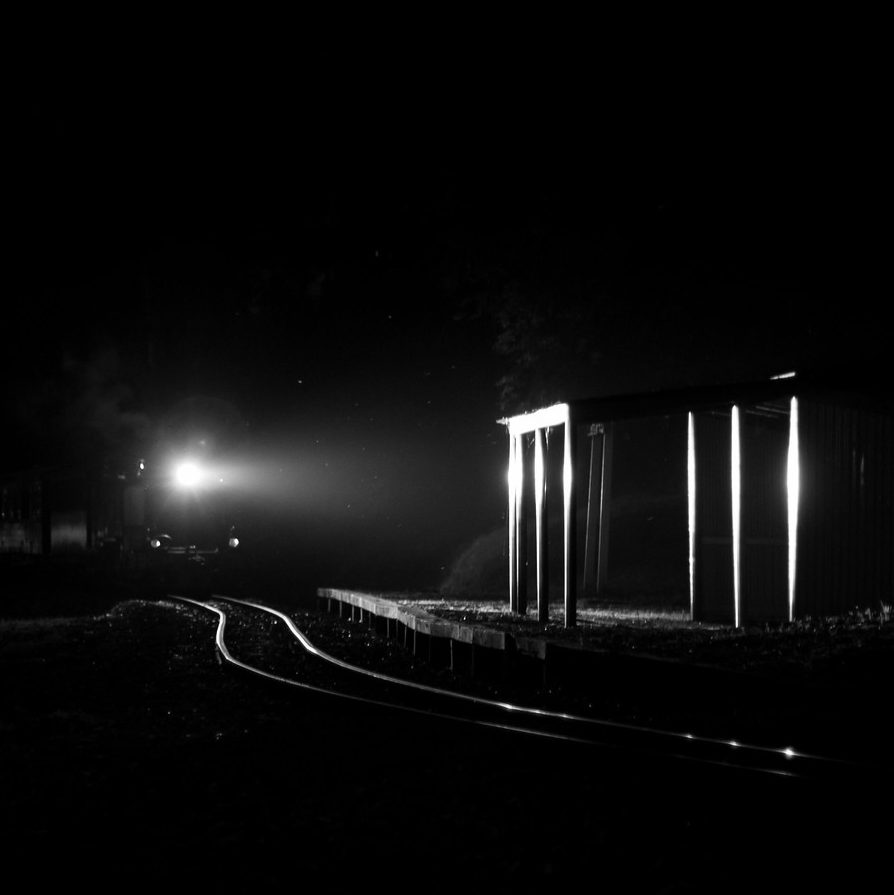
Image: Ribbons by Michael Greenhill on Flickr. A haibun-like piece on a recent train journey – with audio (just for fun – the music loop c/- setunian on freesound.org).

Here, you can book your own tickets on the Northern Express (travels between Sydney and Brisbane, though when I travelled the train only got as far as the border and coaches took passengers the rest of the way into Brisbane) For those of you interested, here’s more about Love is Blind.

And for music this morning, who else but Dylan with his own take on the northern express with Slow Train. (Youtube) from his 1979 album (Youtube) of the same name.

The Beaufort Wind Force Scale in 12 tanka

Yachts on Port Jackson, Sydney, 2 January 1941, PIX magazine c/- State Library of NSW on Flickr
0
sea like a mirror
sails drowse useless as rags
smoke rises vertically
ask me how high the waves
—not a one on this painted sea 

1
ripples and light airs
water like mackerel scales
and on shore 
smoke drifts shows the way
(wind vanes unmoved)

2
call it a breeze now
a cat’s paw, gentle wavelets
with glassy crests
yes, that’s wind on your face 
leaves shift and wind vanes creak

3. 
almost at ten knots 
this breeze pushes large wavelets  
a few white horses
leaves move, even little twigs
those once furled flags extend

4 
surely more-than-a-breeze
made these small waves cohere
freed white horses
raised dust and loose papers
and moved small branches 

5
finds freshening winds
with many white horses
(galloping herds?) 
occasionally spray
small trees in leaf begin to sway

6 
a strong breeze drives
largish waves, likely there’s spray
foam crests everywhere
whistling down telegraph wires
—umbrellas buck, hats fly orf

7
now the sea heaps up
foam blown along in streaks
spindrift (from the scots)
whole trees, hillsides in motion
walkers lean comically

8
here at last a gale
edges of wave crests break
foam is blown along
in well-marked streaks
and twigs on trees  |   snap

9
a strong gale: high waves
streaks of foam flying
sea begins to roll
chimney pots and roofing slates
gone                  (gone? )

10 
as storm or whole gale
very high waves with long
overhanging                    crests
the sea’s surface is white 
trees down, some houses lost 

11
violent storm
exceptionally high waves
small and mid-size ships
may be lost                    to view
widespread damage

12
hurricane's scream
air filled with foam
seas completely white
I’m blinded by driving spray
and on land
                        devastation

Image: Yachts on Warrane (Port Jackson), 2 January 1941, PIX magazine Sailing series, from original negative, State Library of New South Wales on Flickr. A tanka series inspired by an audio piece, A Mirror Featuring Steve Urquhart played on BBC Short Cuts.

And for music this morning (bear with me) here’s Trio Ramberget – with 24 ways volume 1 (and here’s volume 2). (Youtube). Mesmerising meditations with bass clarinet, trombone and double bass.

In the graveyard – a haibun (with audio)

Recently, while photographing in Wollongong Cemetery, I met a woman who used to be in the ‘industry’ and we started talking. As an ex-funeral director, she pointed out those she’d put in here: one over there, a couple further back. Even family members, a cousin, an uncle by the fence. Not her husband though, he’s buried elsewhere.

Since he’d passed, she’s been touring the country with her friend looking at cemeteries. I asked what she was searching for but all she said was, ‘I just like them, they’re peaceful.’ They’ve even visited Western Australian graveyards, tooling across the Nullarbor in their Daihatsu hatchback with purple wire wheels. 

          Graves, grandiose black
          marble and a patch of lawn 
          for the stillborn babes.

Originally established on the outskirts, over the last hundred years the city has grown to surround the cemetery. Light industry on one side, housing and a high school on the other; it takes effort to block out road noise and the clanking of a backhoe being unloaded.

          Flowers and tended plots 
          then Ryan’s pine cross—ten years
          and still no headstone.

We talk about masonry styles, urns and torches, the broken column of a life cut short. She points to the earliest part of the cemetery dating back to the 1850s, now an enclave behind the courier depot and the indoor sports centre. Aside from the trees, we’re the only ones breathing in all this crowd. 

          I have no graves 
          Dad’s ashes off Fremantle
          a bloom in deep water.


Image: the old section of Wollongong Cemetery. I hope you like the reading of this piece.

And for music this morning here’s Irish folk/country singer Brigid Mae Power with her song I’ll wait outside for you (Youtube) from her new album Dream from the Deep Well.

Listen up…

Recently, I’ve been busy recording some of my favourite Illawarra and South Coast poets for our forthcoming poetry anthology 34-37 Degrees South, Country which is due out later this year from the South Coast Writers Centre.

To whet your appetite, here’s a few poets (Dr Elanna Herbert, Sandra Renew, Kai Jensen and Moira Kirkwood) reading their poems and talking about the making of these works.


Image: c/- Ash Taylor as part of the Wonderwalls Project Port Kembla 2022, commissioned by Wollongong City Council as part of its public art program. The mural is located on the corner of Wentworth Street and Church Street Port Kembla (on the wall of the local bottle-o).

Ash Taylor is a muralist and multi-disciplinary artist captivated and inspired by the beauty found in Australian landscapes and our natural environment. 

Her work is vibrant and energetic, mixing carefully chosen colour palettes, gestural mark making and illustrative style to create a connection between the viewer and nature. By bringing the natural environment to public, urbanized, spaces, Ash amplifies the detail of nature and creates space for consideration of conservation and preservation of our ecosystems. http://ashtaylr.com