On the northern express

My friend shared a recurrent dream. She’d dreamt this off and on for nearly twenty years, long before she travelled on the northern express. She’s alone on a platform with two large suitcases as the train pulls up. The time to embark is short and she realises the suitcases are too heavy to get both onto the train in time. So she unpacks one, trying to make enough room for the essential stuff, the things she can’t bear to leave behind. But of course in the way dreams recur, the single suitcase is now too full and won’t shut—the straps snap, the latches misfire. Things, a favourite dress, poems she’s been working on, that photograph of her sister, spill out and are snatched away by the wind. And time is running out. The train doors slam, the brakes release and slowly at first but definitely now the train begins to move.

I mention this only because on the northern express, the same scene was repeated again and again by people with overfull shopping bags or saggy cardboard boxes. There was one family who nearly didn’t make it: the mother swaddled a newborn while shouldering her backpack; the father had a backpack, a front satchel, two shopping bags and a sleeping roll and herded two grizzly five-year-olds, each trailing their own luggage, towards the exit. The conductor had to hold the train.

Most people manage, except the old guy in the seat in front of me. He explained about a recent shoulder reconstruction as he fished for his pack on the parcel shelf with his walking stick. I offered to help but he muscled it down on his own and wincing slung it over his shoulder. A wan farewell and then he hobbled off down the aisle. I saw him pushing his walker slowly along the platform as we moved off. Later at the terminus I noticed that he’d left his leather hat behind. Life is a process of acquiring and then sloughing off stuff until we walk again bare headed in the world.  

we move at ground level
at sea level 
the tracks run out
onto the sand
sky arches over

At Gosford, Jasmine took the seat next to me. She was travelling to Wauchope, where her Mum would meet her. They’d spend the weekend together and she would fly back on Monday. She was well-prepared for the trip and after these brief pleasantries, slipped on her headphones to watch a reality show called ‘Love is Blind’ on her tablet. Occasionally I’d sneak a look at her screen. This episode involved fit young women and men lounging about poolside, drinking from silver goblets and flirting with each other while ignoring the camera crew and the sound guy leaning in to catch a whisper. Set ups and let downs were everywhere: partners came on to strangers, were unfaithful, and later couples confronted each other, argued and tearfully cancelled their engagement. The episode that Jasmine had downloaded came with subtitles and these formed a kind of haiku chorus to the action on screen: poolside [incomprehensible chatter]; back at the couple’s room [sobbing and sniffles]; alone in the corridor [emotional music rising]. 

Broadmeadow
sun dazzles between factories
corrugated blues and greens
walls of post-industrial rust

——

Each station more beautiful
summer palaces and fishing boats
billboards and quarries 
intensified—
already the shadows deepen

We travel through time in armchairs. Daylight shifts from midday to a bright afternoon where colours are bleached, the shadows absolute. Then as the light slowly eases the buildings and ridgelines become more and more beautiful. Even ugly things—a blackberry bramble over a car wreck, a creek strangled with lantana, an abandoned warehouse half falling down—become splendid in this golden painterly light; the young mum pushing a pram along the platform at this hour looks like Botticelli’s Madonna. 

And then, as if it fell off a cliff, the day is gone and with it the landscape. Now there’s just looming shadows and our reflections mirrored in the cabin windows. The train rushes on past a vacant station, traffic crossings, a farmhouse. 

the empty platform
it’s late and the drunks
are rowdy in utes 
I climb the hill with my suitcase
the hotel like a furnace

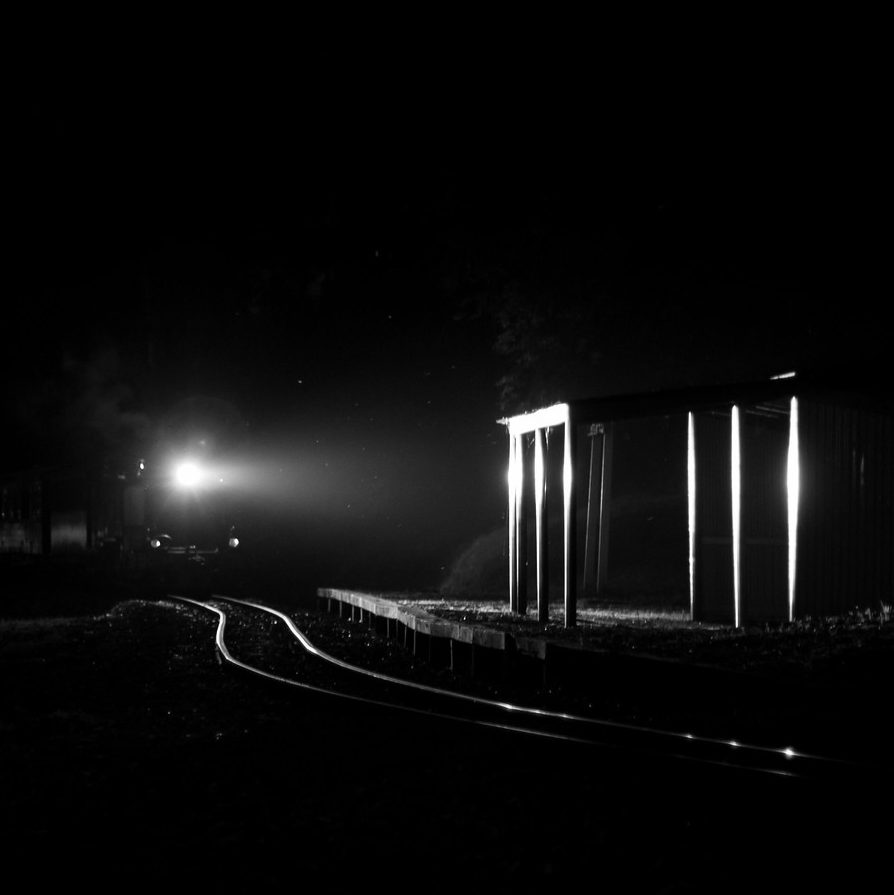
Image: Ribbons by Michael Greenhill on Flickr. A haibun-like piece on a recent train journey – with audio (just for fun – the music loop c/- setunian on freesound.org).

Here, you can book your own tickets on the Northern Express (travels between Sydney and Brisbane, though when I travelled the train only got as far as the border and coaches took passengers the rest of the way into Brisbane) For those of you interested, here’s more about Love is Blind.

And for music this morning, who else but Dylan with his own take on the northern express with Slow Train. (Youtube) from his 1979 album (Youtube) of the same name.
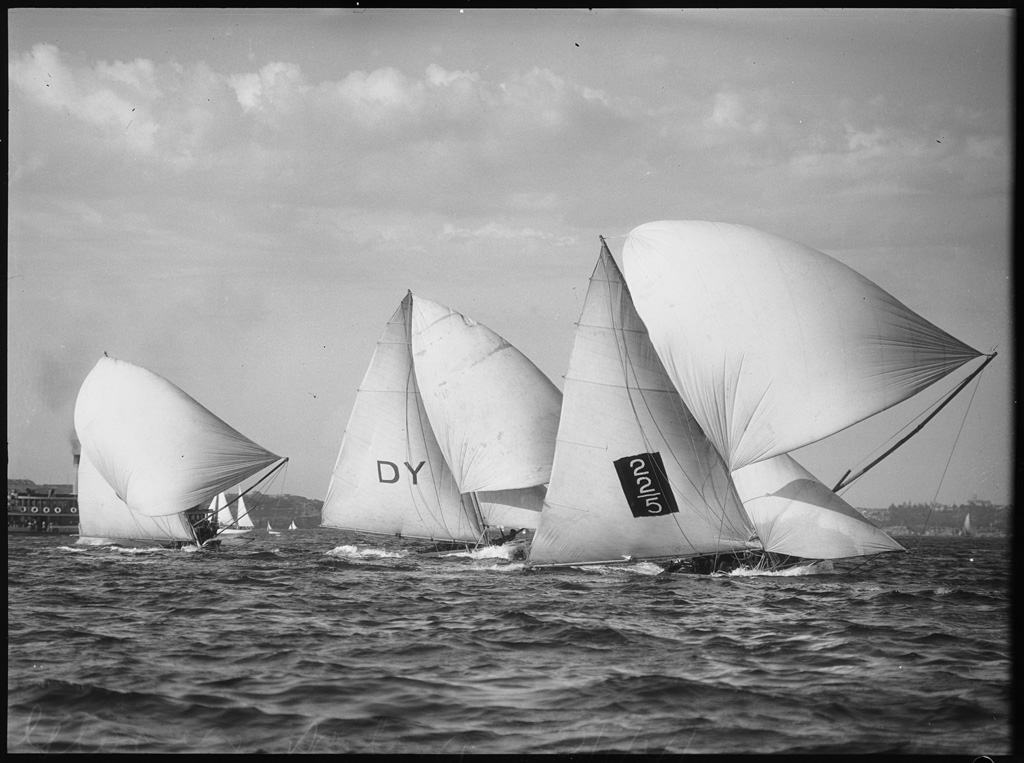
The Beaufort Wind Force Scale in 12 tanka

Yachts on Port Jackson, Sydney, 2 January 1941, PIX magazine c/- State Library of NSW on Flickr
0
sea like a mirror
sails drowse useless as rags
smoke rises vertically
ask me how high the waves
—not a one on this painted sea 

1
ripples and light airs
water like mackerel scales
and on shore 
smoke drifts shows the way
(wind vanes unmoved)

2
call it a breeze now
a cat’s paw, gentle wavelets
with glassy crests
yes, that’s wind on your face 
leaves shift and wind vanes creak

3. 
almost at ten knots 
this breeze pushes large wavelets  
a few white horses
leaves move, even little twigs
those once furled flags extend

4 
surely more-than-a-breeze
made these small waves cohere
freed white horses
raised dust and loose papers
and moved small branches 

5
finds freshening winds
with many white horses
(galloping herds?) 
occasionally spray
small trees in leaf begin to sway

6 
a strong breeze drives
largish waves, likely there’s spray
foam crests everywhere
whistling down telegraph wires
—umbrellas buck, hats fly orf

7
now the sea heaps up
foam blown along in streaks
spindrift (from the scots)
whole trees, hillsides in motion
walkers lean comically

8
here at last a gale
edges of wave crests break
foam is blown along
in well-marked streaks
and twigs on trees  |   snap

9
a strong gale: high waves
streaks of foam flying
sea begins to roll
chimney pots and roofing slates
gone                  (gone? )

10 
as storm or whole gale
very high waves with long
overhanging                    crests
the sea’s surface is white 
trees down, some houses lost 

11
violent storm
exceptionally high waves
small and mid-size ships
may be lost                    to view
widespread damage

12
hurricane's scream
air filled with foam
seas completely white
I’m blinded by driving spray
and on land
                        devastation

Image: Yachts on Warrane (Port Jackson), 2 January 1941, PIX magazine Sailing series, from original negative, State Library of New South Wales on Flickr. A tanka series inspired by an audio piece, A Mirror Featuring Steve Urquhart played on BBC Short Cuts.

And for music this morning (bear with me) here’s Trio Ramberget – with 24 ways volume 1 (and here’s volume 2). (Youtube). Mesmerising meditations with bass clarinet, trombone and double bass.

In the graveyard – a haibun (with audio)

Recently, while photographing in Wollongong Cemetery, I met a woman who used to be in the ‘industry’ and we started talking. As an ex-funeral director, she pointed out those she’d put in here: one over there, a couple further back. Even family members, a cousin, an uncle by the fence. Not her husband though, he’s buried elsewhere.

Since he’d passed, she’s been touring the country with her friend looking at cemeteries. I asked what she was searching for but all she said was, ‘I just like them, they’re peaceful.’ They’ve even visited Western Australian graveyards, tooling across the Nullarbor in their Daihatsu hatchback with purple wire wheels. 

          Graves, grandiose black
          marble and a patch of lawn 
          for the stillborn babes.

Originally established on the outskirts, over the last hundred years the city has grown to surround the cemetery. Light industry on one side, housing and a high school on the other; it takes effort to block out road noise and the clanking of a backhoe being unloaded.

          Flowers and tended plots 
          then Ryan’s pine cross—ten years
          and still no headstone.

We talk about masonry styles, urns and torches, the broken column of a life cut short. She points to the earliest part of the cemetery dating back to the 1850s, now an enclave behind the courier depot and the indoor sports centre. Aside from the trees, we’re the only ones breathing in all this crowd. 

          I have no graves 
          Dad’s ashes off Fremantle
          a bloom in deep water.


Image: the old section of Wollongong Cemetery. I hope you like the reading of this piece.

And for music this morning here’s Irish folk/country singer Brigid Mae Power with her song I’ll wait outside for you (Youtube) from her new album Dream from the Deep Well.

Listen up…

Recently, I’ve been busy recording some of my favourite Illawarra and South Coast poets for our forthcoming poetry anthology 34-37 Degrees South, Country which is due out later this year from the South Coast Writers Centre.

To whet your appetite, here’s a few poets (Dr Elanna Herbert, Sandra Renew, Kai Jensen and Moira Kirkwood) reading their poems and talking about the making of these works.


Image: c/- Ash Taylor as part of the Wonderwalls Project Port Kembla 2022, commissioned by Wollongong City Council as part of its public art program. The mural is located on the corner of Wentworth Street and Church Street Port Kembla (on the wall of the local bottle-o).

Ash Taylor is a muralist and multi-disciplinary artist captivated and inspired by the beauty found in Australian landscapes and our natural environment. 

Her work is vibrant and energetic, mixing carefully chosen colour palettes, gestural mark making and illustrative style to create a connection between the viewer and nature. By bringing the natural environment to public, urbanized, spaces, Ash amplifies the detail of nature and creates space for consideration of conservation and preservation of our ecosystems. http://ashtaylr.com

Winter ode (lunch with Linda)

we agree

—the correct way to eat Bàhn Mi is with irony and a raised fist—the baguette as de-colonised bun of resistance, made fluffier/cheaper with a handful of rice flour by the Chinese bakers kept in back—pickled radish, carrots and def. go the vegan (eschew pâté in solidarity with the goose)

—on stolen land, beneath London Plane Trees (ugh! more foreigners)—mottled trunks and non-invasive rootage favoured for civic squares everywhere. But it’s their deciduosity (adj: a part that falls off or is shed, as sprouts tumble from my ricepaper roll viz. the deciduous roll) that allows the first sun for days 

—we chat about Sappho and Aphrodite—Achilles sword drawn chasing Hector thru the laundry pools off the Scamander—Joyce and Nausicaa, masturbation and the empty trains to Port Kembla abandoned to the pervs.

The office-workers hurry their take-aways back to their desks; how lucky are we?  Dribble of nuóc châm down my shirt-front—too heavy on the fish sauce, you say (pungency n.) takes you to Phú Quôc island where fishers turn the iridescent beauty of a billion anchovies into the best fish sauce in all the Socialist Republic. Love Island©resorts for tourists and party hacks, once a prison for dissidents and missionaries— 

         beyond the barbed wire, palm trees
         shade the water in the afternoon
         so baby can swim 

You show me photos of Monkey Magic Kingdom garish reds and yellows—I’ll play Pigsy and you can be Tripitaka, your journey to the west...

for now the world becomes intelligible, full of contradiction and good crunch—history as an unreliable menu scrawled on a blackboard—a puddle of sauce glints in the sunshine. 

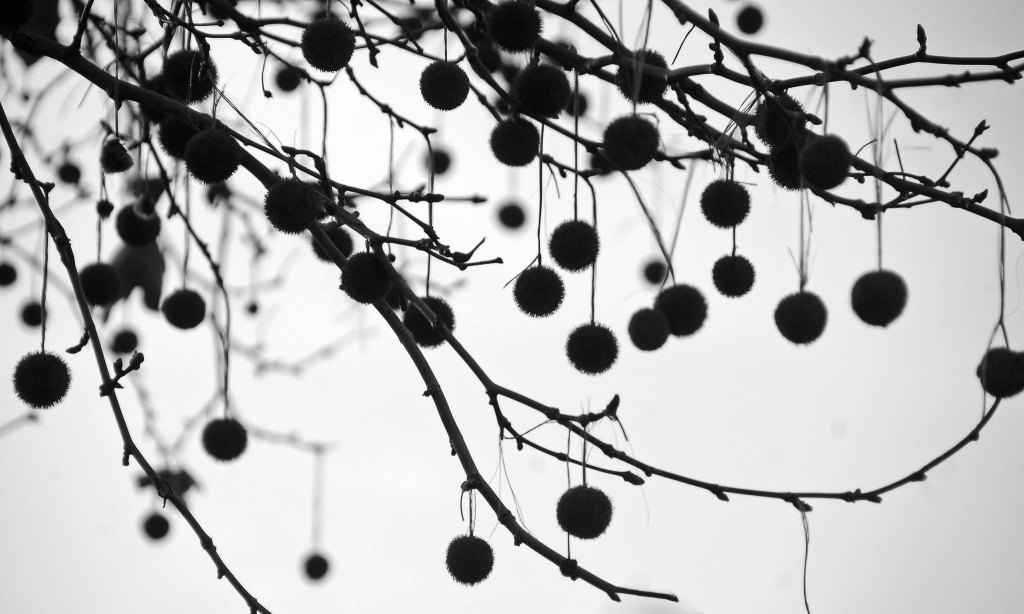
Image: London Plane Tree by FreddieBrown on Flickr.

For music this morning here’s some lively prepared piano by Taiwanese-Australian pianist Belle Chen from her 2019 album Departures (Youtube).

Our projects

My wife and I have been separated for some years. She lives in a flat in town and I’m out here in the burbs with the lawn mowers and the drug dealers. But we still see each other—daily. I’ll drop over for lunch (she’s made a Moroccan casserole and there’s too much for one person) or she’ll stop in on her way back from somewhere to pick up a bag of lemons from our tree.

We also have our projects. Last week she turned up with a broken wall clock; Saturday there was a problem with her car’s petrol cap; and recently we’ve been working on finding her a new phone. 

We were both in management before we retired, so we like problem-solving. First, she wrote out the criteria for her new phone (both essential and nice-to-have), did the research, studied the reviews and visited phone user forums. Once she’d settled on a model, I went to that auction site and found several quality candidates that balanced price, battery-life and condition (‘imperceptible scratching on the frame’ versus ‘a tiny abrasion on the logo’). Once delivered, I sent her a photo of the box on the kitchen table and a thumbs up emoji. She replied with a green heart.

Next, we worked on how to set up the new phone, how to migrate years of messages and photos, what apps to keep, what plugs and cables were required. I sent her a link to a YouTube video where a technician rehearsed the sequence of manoeuvres needed to effect the upload. ‘It’s easy,’ he said showing us how the phone should look when the transfer was done. 'You see, happy phone.' 

Before the phone project, I had a washing machine emergency. She quickly researched noise ratings, water efficiency and which companies had the lowest carbon footprint and highest ratings for ethical manufacturing. I did the install. 

‘What a team,’ she said as we stood together in the laundry that afternoon watching the new washer slosh through its first cycle. Then we did a clumsy hi-five and for a moment her hand came to rest warm in mine. 

As I sit at my bench with the wall clock disassembled about me, I wonder will this end? Will there come a time when all our appliances are working, all our lightbulbs, our automobiles? Then I look at the flimsy plastic screws they’ve used to fix the clock in place and realise that cheap industrial design will keep us in projects for years. 

I was walking the dog on the beach yesterday morning. A pale wintrous sun had barely crested the horizon and a brisk easterly eddied the sand. A couple had stripped down and were walking into the water (even though the sea is currently down to 18 degrees and with the wind it must have been much colder). They stood apart. Neither egged the other on—it was clear they were serious about the swim. I saw how they hunched into themselves as they entered the water: knee- then waist-deep and I could hear them gasp as a wave broke over their shoulders. Ahead of them waves were lined up across the bay, coming on one after the other. 

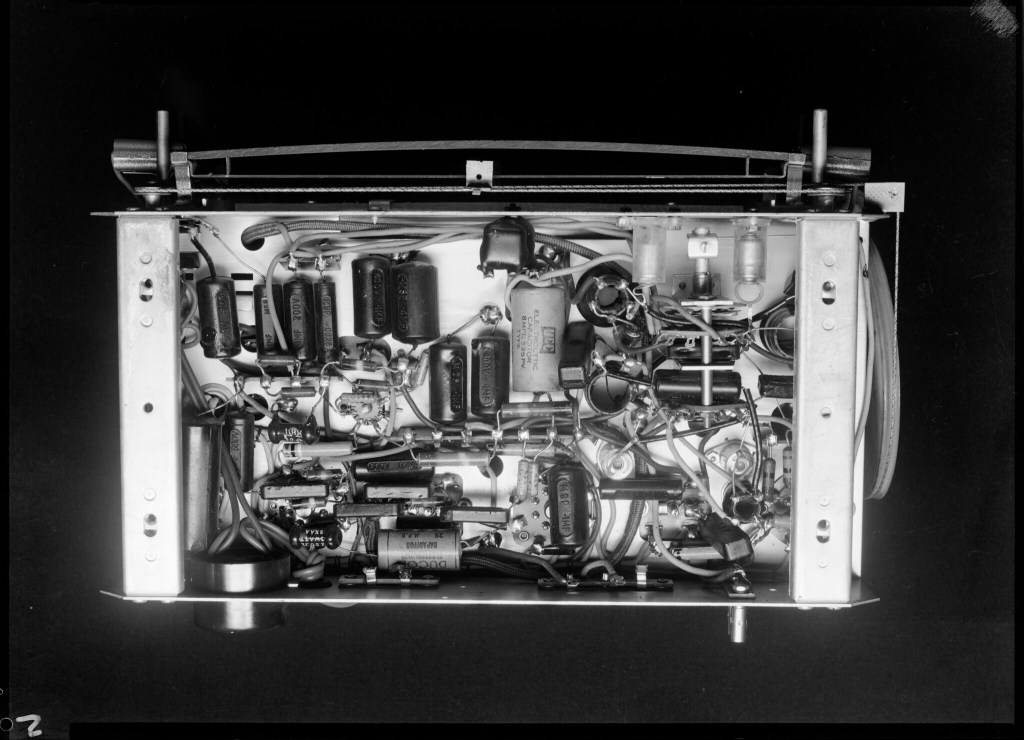
Image: Circuits and electronic components of an AWA radio, Sydney, Australia, 1948 – 1953, by Max Dupain c/- State Library of NSW on Flickr.

And for music this morning from 2009 here’s Swedish jazz trio the Esbjörn Svensson Trio (or e.s.t) with  From Gargarin’s Point of View (and Youtube) – from Retrospective The Very Best of E.S.T. (Youtube)

Closing soon…

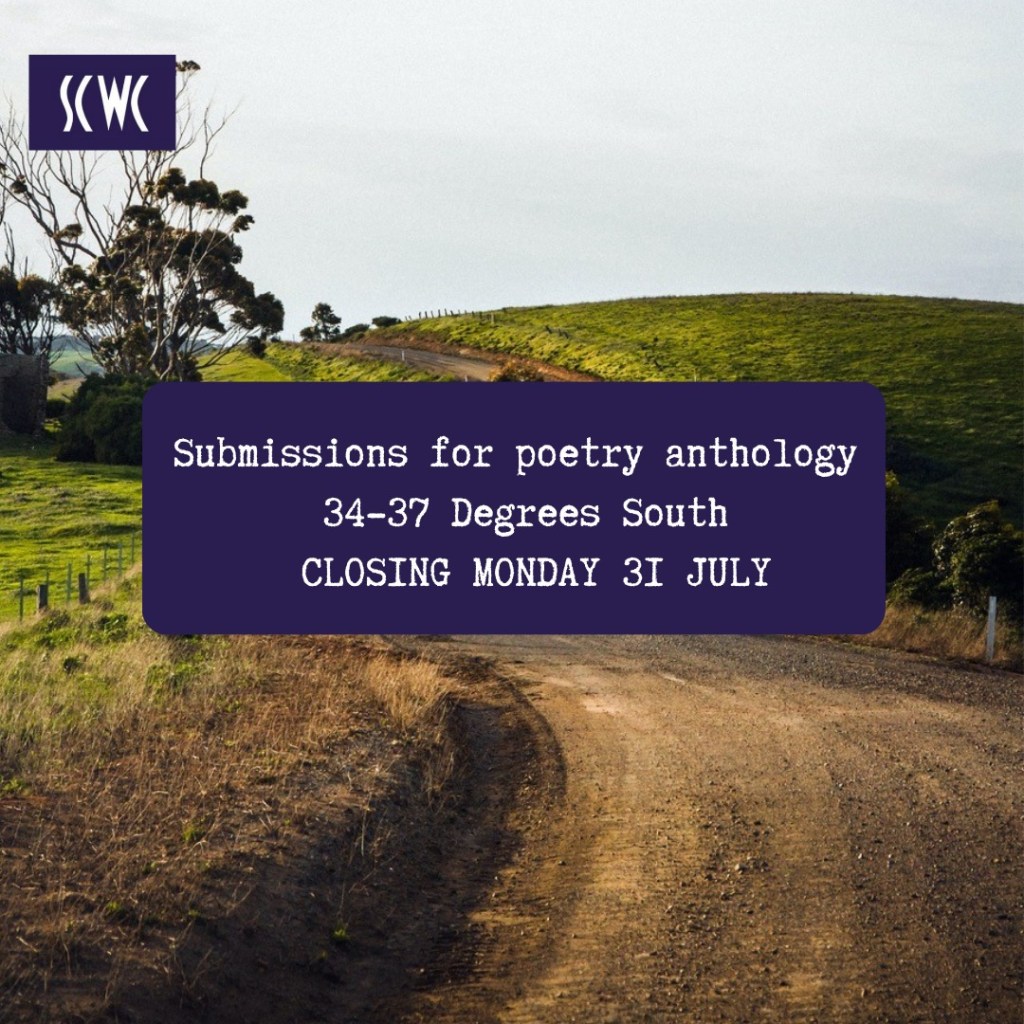
Call out to all Illawarra, South Coast and Southern Highlands of NSW poets – submit your best poems on the theme of Country here.

You can read (or download for free) last year’s beautiful anthology here brought to you by the South Coast Writers Centre.


This morning’s music (good for writing poetry) is Tempest in Teapot (Youtube) from Swedish-Estonian musician Tuulikki Bartosik – You know how much we love a good accordionist at this website.

For the witch in your life…

Ruby is a regular 11-year-old, until she learns the power of her blood magick! Journey with Ruby as she meets her spirit animal, Zasha, and wise woman, Hekate and learns the truth about her Menarche, her first blood and the mission to wake up the witches. This gorgeous little book, hand drawn by Freya Rose, written by Kari Hill  from a story by Bella Tozer is available here as both hardcopy or e-book.

Vale Ron Pretty AM


On 30 June, friend, poet, publisher and tireless advocate for poetry Ron Pretty AM passed away at home after a long illness.

Ron had battled with deteriorating health for many years and in the last month he had contracted pneumonia which he was unable to shake. Ron is survived by his partner Jane, their two daughters Alana and Saroja and six grandchildren. 

A few highlights of his distinguished career of over 50 years:

  • helped establish the South Coast Writers’ Centre (this year celebrating its 25th year). 
  • From 1987 to 2007, he was the founding director of Five Islands Press, a leading publisher of contemporary Australian poetry. During his tenure, the Press published 230 books (that’s about one a month) by Australian poets, many of which have subsequently been shortlisted for or won prizes. 
  • Between 2000 and 2007, Ron ran the Poetry Australia Foundation – a foundation directed at promoting Australian poets and poetry. He is now a life member of its successor, the Australian Poetry Inc.
  • Ron Pretty’s services to literature, and Australian poetry in particular, were acknowledged by the NSW Premier’s Special Prize in 2001 and an Order of Australia (AM) in 2002. 
  • In 2012, the Australia Council for the Arts also awarded Ron a residency at the Whiting Studio in Rome. 

Last year (28 August, 2022) I joined with Ron at the launch of his last collection of poetry (his eighth book of poetry) 101 Poems published by Pitt Street Poetry. The text of our speech is here.

101 Poems is available through Pitt Street Poetry, along with his wonderful Creating Poetry – now in its 3rd edition. A celebration of Ron’s poetry is at Radio 3CRSpoken Word program and is now available as a podcast.

And here’s one of many favourite poems:

Wind

Such an evening: trees immobile, the sky
reaching citrus to the indigo escarpment,
finches playing at the bird bath, the world
holding its breath: nothing as perfect as this
can long endure. The lake is a sheet of steel,
there's a distant call of football at its play.

Night is also calling. Candles will be lit,
voices will hush a moment before resuming
their living squall. Out of southern darkness
comes the wind. Trees shiver, the candle
is soon snuffed out. Only in earth perfection
endures, for as long as cicadas and bones.

Will you light a candle for me, my love
in a corner where the wind never blows.

And for music, here’s one of Ron’s favourite composers Phillip Glass played here by Icelandic piano super-star Vikingur Olafson – Opening from Glassworks (Youtube)

A drier winter

How like us, all nostalgic about rain:
Jesus-walking through lagoons of tall grass,
forests of floodwater, Kevin 07 knee-deep

down a Brisbane street explaining... how
my seedlings wither, this blue desiccation. 
I’m in the garden spraying water and imprecations 
this is our fallow year—all that’s left

is to wander through old photographs: 
the monsoon in Varanasi (your shirt 
is so drenched), sodden in Gaudi’s park, 
drizzly in anoraks on Brighton Pier.

We rise early, drink tea, are quiet round the house.
The weatherman’s full of juju; we avert our eyes.
You wake at 3, listening—
                             that could be rain.

Image: untitled by Daniel Iván c/- Flickr. For those of you who don’t follow Australian politics, the Kevin 07 reference is to the former labor Prime Minister Kevin Rudd (elected in 2007), who during the floods in Brisbane Queensland in February 2011, helped residents shift their suitcases and furniture (blurry video here).


And for music this morning, here’s Swedish-Estonian accordianiste Tüülikki Bartostik with Norrland (youtube) from her eclectic 2023 album Playscapes (it’s worth a listen).